


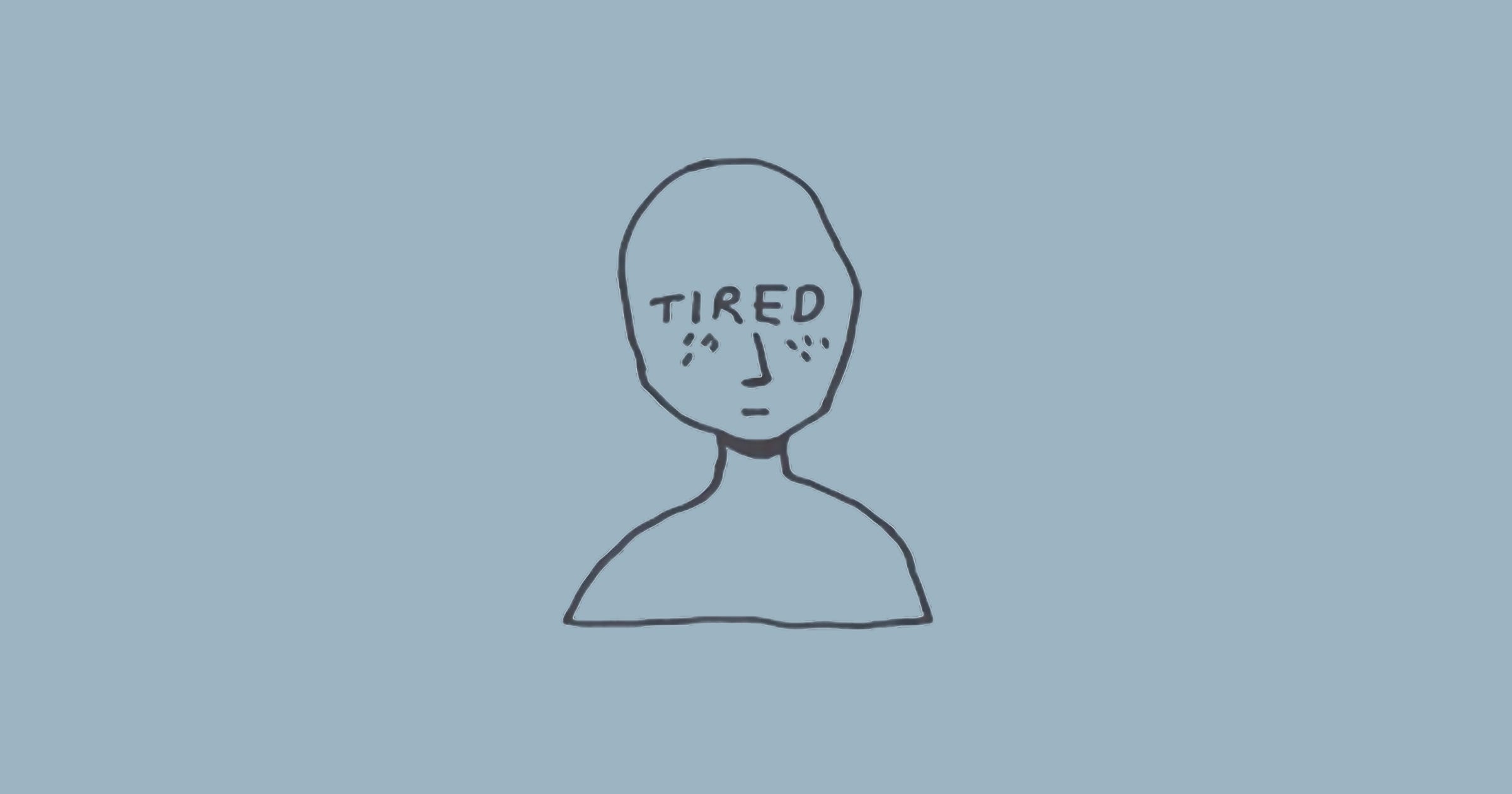
there’s a specific kind of tired that comes from scrolling through AI posts.
it’s not the tired from doing too much. it’s the tired from watching others do too much - or at least, appearing to. every day there’s a new tool, a new workflow, a new “i built this in 10 minutes with AI” post. and somewhere between the third and fourth one, a quiet guilt starts to creep in.
am i keeping up? should i be trying that? why haven’t i tried that yet?
i’ve been feeling this a lot lately. and what makes it harder to shake is that it doesn’t just feel like missing out on tools, it starts to feel like missing out on who you’re supposed to be becoming.
i’ve always thought of my strengths as a designer in pretty specific terms: i move fast, i have good taste, i can articulate ideas clearly. those things felt like mine. but lately, scrolling through what AI can do, those same strengths start to feel... negotiable. you think you iterate fast? AI can prototype 20 directions in five minutes. you think your taste is sharp? there are tools that have consumed more visual references than you’ll see in a lifetime. you think you write and communicate well? you know.
it’s a strange kind of identity erosion. slow, quiet, and hard to name until you’re already in it.
think of AI less like a revolution, more like a new tool
i was talking to a friend about this the other day, and something they said reframed it for me in a way i haven’t been able to shake.
they said: think about AI just as a new tool, nothing more.
which, yes, obvious. i know. but hear me out, because i don’t think we actually believe it, even if we say it.
the narrative around AI right now is macro. it’s civilizational. people talk about it like a third industrial revolution, like the steam engine, like electricity. and that framing does something to you. it makes the stakes feel enormous. it makes “not trying every new product” feel like falling asleep at a historical turning point.
but here’s the thing about the steam engine: people didn’t interact with steam directly. they interacted with specific machines that happened to run on steam. and different trades used different machines. a tailor didn’t need to know how to operate a locomotive. a carpenter didn’t need a textile loom. each person just needed to know: what am i trying to make, and what’s the best tool for that job?
that’s it. that’s actually the whole thing.
when i shifted to that frame from “i need to stay current with AI” to “what’s actually missing in my workflow right now?”, the anxiety didn’t disappear, but it got smaller and more specific. suddenly i wasn’t scrolling to keep up. i was looking for something. am i finding good inspiration? am i exploring enough directions before committing to one? am i communicating with engineers as clearly as i want to? those are real questions. and they point to real tools, not just the newest ones.
choosing a tool becomes a design problem. and design problems, i know how to sit with.
and when you pick the right tools - the ones that map to what you’re actually trying to do - something shifts:
it no longer feels like AI is replacing what makes you good, it’s more like AI is augmenting what you’re good at.
i heard Jamey Gannon describe this recently: she's using AI not just to do her job faster, but to go deeper into her own style, to expand what was already distinctly hers, and to articulate her style in a more visual way. that reframe stuck with me. that shows a different relationship with the tools, and a different relationship with yourself.
the posts are not the work
but there’s a second layer to this, and it’s the one that’s honestly harder to admit.
a lot of the anxiety isn’t really about the tools. it’s about the posts.
the people online who are constantly sharing their AI experiments, their new workflows, their “vibe-coded this in an afternoon” projects. watching them makes you feel like you’re behind. like they’re living in the future and you’re still catching up.
my friend put it simply: those posts are like people wearing lululemon at the gym and posting about it.
not everyone who posts their workout outfit is the most dedicated athlete. and plenty of serious athletes never post anything at all. the post is a signal - part personal brand, part performance, part just... how some people process their enthusiasm publicly. it’s not an accurate map of who’s actually putting in the work.
and when i actually sat with that and really reflected on it, i realized: i am learning. i am trying new things. i use AI in my process more than i did six months ago, more than i did last year. i’m just not documenting it publicly. i’m not building a brand around it. and somehow, somewhere along the way, i started confusing visibility with effort.
it’s the same trap as comparing your worst to other people’s best. just a new context.
be more intentional, not more informed
i don’t think the feeling fully goes away. the pace is genuinely fast, and some of the uncertainty is real, not imagined.
but what’s actually helping me is getting more intentional about it. less doomscrolling about “what is AI doing to the industry” and more reflecting on “what do i need to make better work this week.” less scrolling for coverage and more asking what’s actually missing.
and i want to be clear - this isn’t about stepping back from AI. i’m still curious. i still want to explore, experiment, try new things. that part hasn’t changed.
what i’m trying to change is the energy i bring to it. less frantic, more grounded. less “i have to try this or i’ll fall behind” and more “i wonder if this could help me do what i care about better.” that shift is small but it changes everything about how the exploration feels.
the goal was never to keep up. it was always to do good work. AI doesn’t change that. it just gives us more to be intentional about.
and if you’re feeling tired right now, same. but i don’t think that means we stop. i think it just means we get to choose how we move forward.